


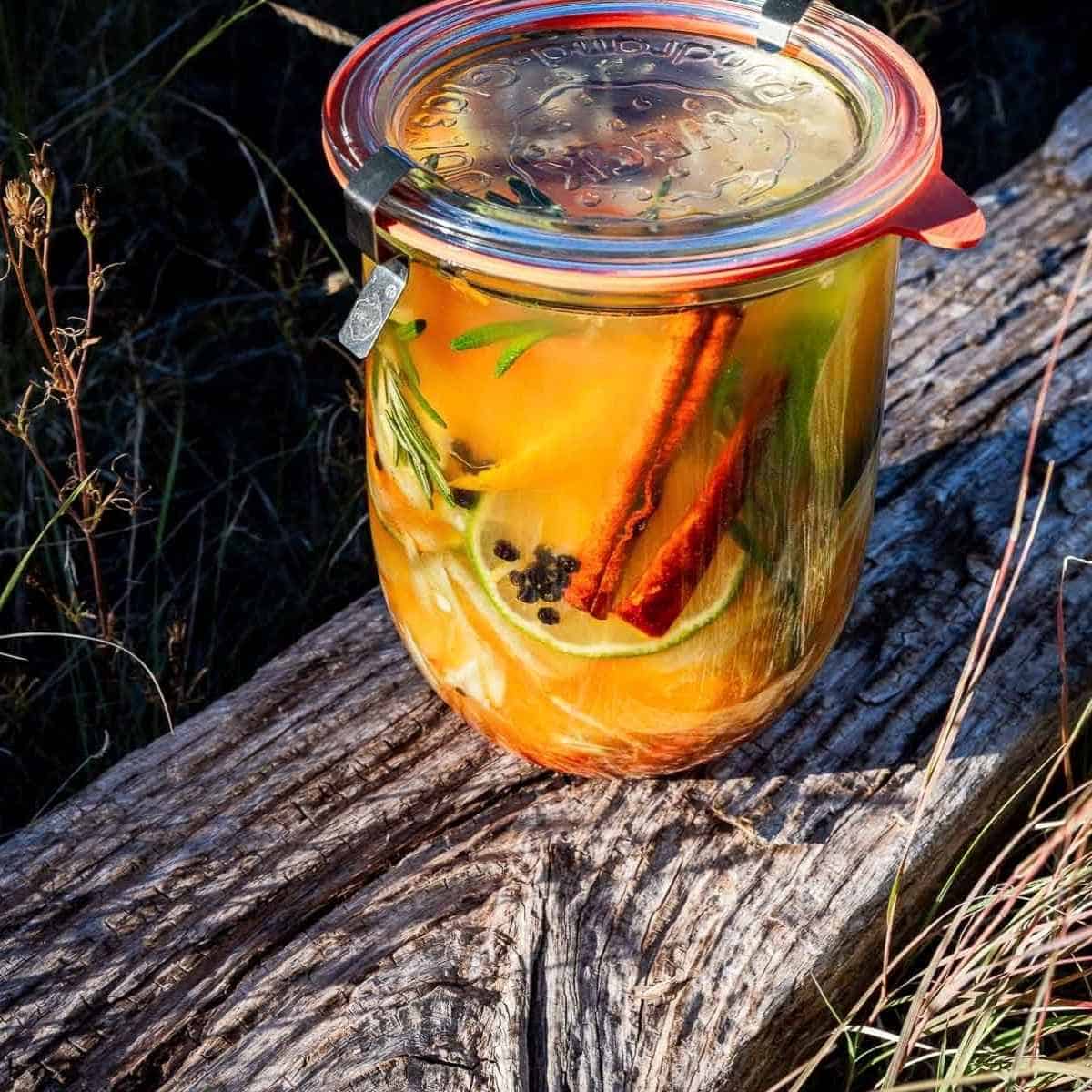
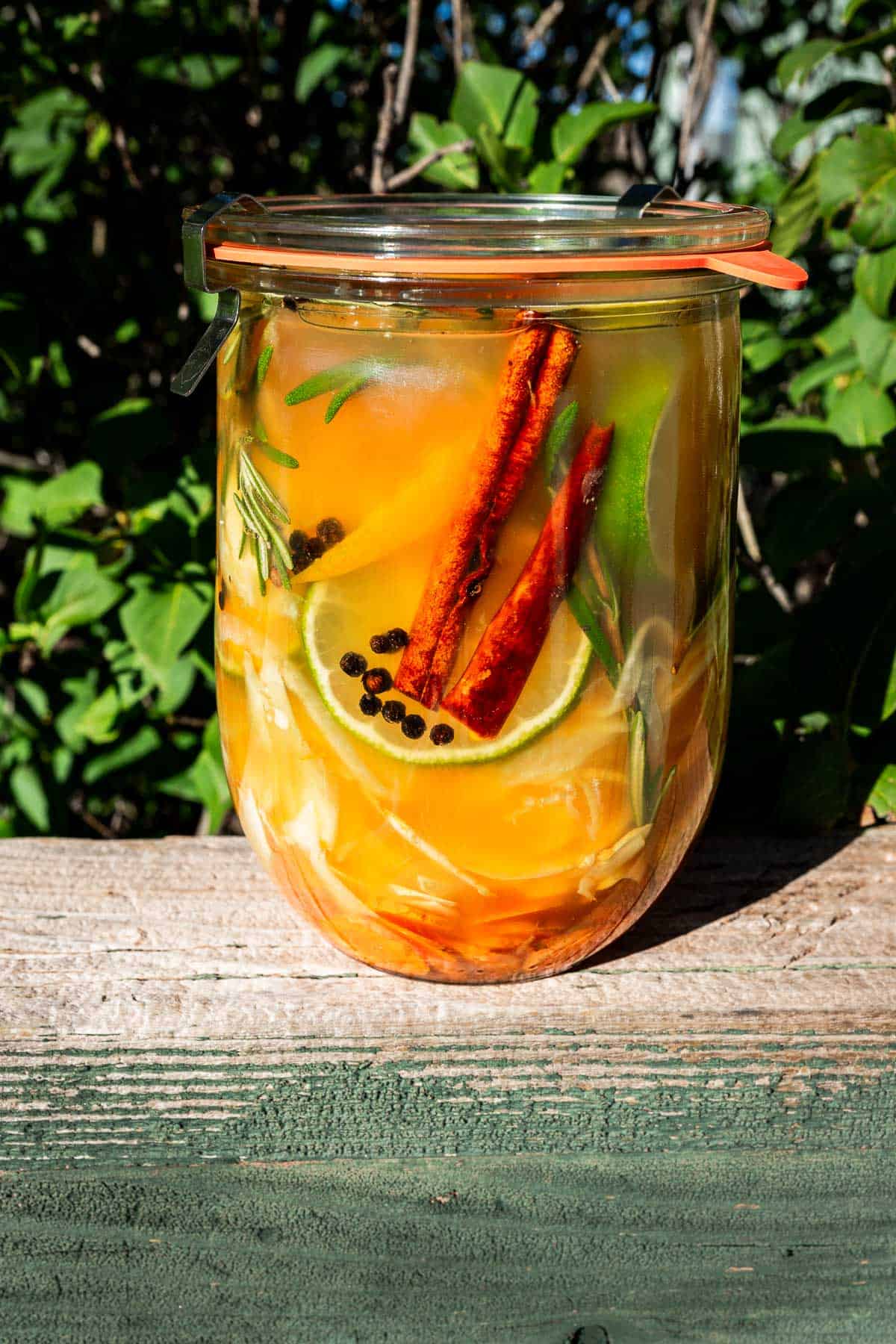
My homemade fire cider recipe steeps fresh ginger, horseradish, turmeric, garlic, onion, dried cayenne peppers, rosemary, and slices of lemon, lime, and mandarin in raw apple cider vinegar for 3 weeks in the refrigerator. The result is spicy, sour, and bright with citrus, and you can take it by the spoonful or use it anywhere you would reach for vinegar.
Jump to a Section
I've made many versions of fire cider over the years, and this citrus-heavy one is my favorite. Lemon, lime, and mandarin go in alongside the classic horseradish, ginger, garlic, and onion, with fresh rosemary and dried cayenne peppers for an extra kick.
I like to take a spoonful here and there, stir it into tea, and shake it into salad dressings. I'll walk you through how to make fire cider step by step, where it came from, how long to let it infuse, and a long list of ways to actually use it once it's done. Enjoy!

What Is Fire Cider?
Fire cider is a vinegar infusion made by steeping pungent, spicy ingredients in apple cider vinegar for several weeks, then straining the liquid and sweetening it with honey. The classic base is horseradish, ginger, garlic, onion, and hot peppers. From there, almost everyone adds their own touches, like citrus, turmeric, fresh herbs, or warm spices.
The flavor is hot, sour, pungent, and a little sweet all at once. It's traditionally made in fall and taken by the spoonful through the colder months, but I think of it just as much as a pantry ingredient. It works a lot like a flavored vinegar or a shrub, with a lot more heat.
A Short History of Fire Cider
Vinegar infusions like this have been made in home kitchens for a very long time, but the name "fire cider" comes from herbalist Rosemary Gladstar, often called the godmother of modern American herbalism. By her own account, she first made and named the brew around 1980 in the kitchen of the California School of Herbal Studies, then shared the recipe freely through her classes and books. Herbalists everywhere picked it up and started making their own versions, which is exactly what she intended.
In 2012, a Massachusetts company called Shire City Herbals trademarked the name "fire cider" and began asking small herbal makers to stop using it. Three herbalists, Nicole Telkes, Mary Blue, and Kathi Langelier, pushed back and were sued. They became known as the Fire Cider Three, and with support from Gladstar and thousands of people in the herbal community, they fought the case for years. In 2019, a federal judge ruled that "fire cider" is a generic term that can't be trademarked.
So the name belongs to everyone, and so does the recipe. Rosemary Gladstar later collected more than 100 community versions in her book Fire Cider!, and you can read her own account of the trademark case from Storey Publishing. This recipe is my take on that tradition, and full credit for the original idea goes to her.
What Makes My Fire Cider Recipe Different
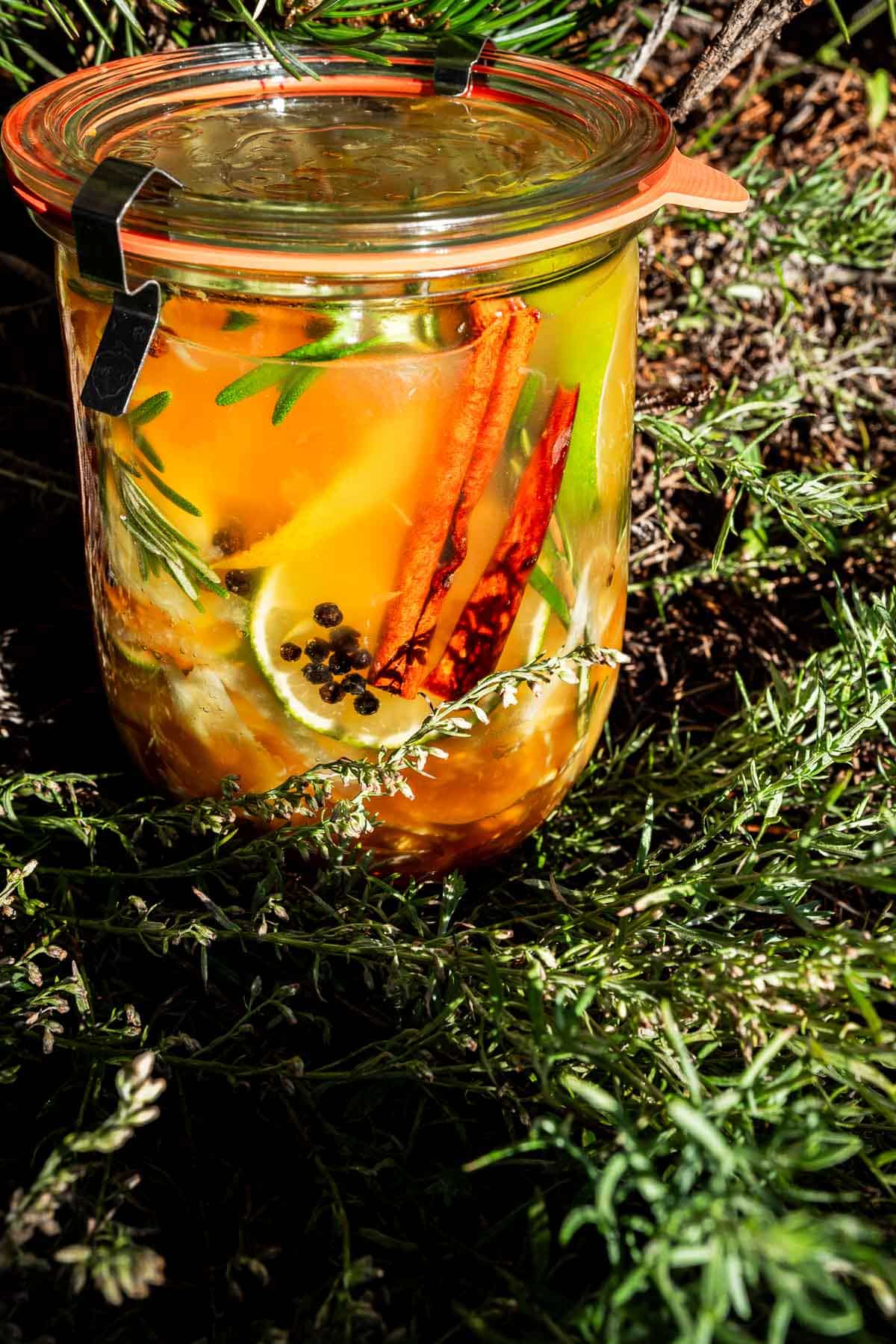
- Three kinds of citrus. Lemon, lime, and a small mandarin orange give this version a bright, layered citrus flavor instead of a single squeeze of lemon.
- Fresh rosemary. A few sprigs add a savory herbal note.
- Dried chiles instead of fresh. I personally find dried cayenne peppers pack a better punch than fresh chiles in fire cider.
- Thin slices, not grating. Everything is thinly sliced, which makes the jar easy to pack and much easier to strain at the end.
- Infused in the refrigerator. I let mine infuse in the fridge for 3 weeks, and it can go up to 5 weeks. I prefer the flavor of this cold infused version.
My Fire Cider Ingredients
You can find everything for this recipe at a regular grocery store. Here's what you'll need and why each one is in the jar. The exact amounts are in the recipe card below!
- Fresh horseradish root: This is the backbone of fire cider and where most of its sharp heat comes from. Don't swap in prepared horseradish from a jar. My local big grocery store chain carries fresh horseradish root in small plastic containers in the produce section, so check near the fresh herbs and specialty produce before you go hunting elsewhere.
- Fresh ginger: Adds a sharp, peppery warmth.
- Fresh turmeric root: Adds an earthy flavor and that deep golden color. It's usually sold in the same kind of small plastic container as horseradish. Fresh turmeric stains cutting boards, countertops, towels, and fingers, so use a board you don't mind turning yellow, or wear gloves.
- Yellow onion and garlic: These give fire cider its savory, pungent depth. Lightly crushing the garlic helps release its flavor into the vinegar.
- Lemon, lime, and mandarin orange: The citrus slices brighten everything and balance the heat.
- Dried cayenne peppers: I prefer dried chiles here because I find they pack a better punch than fresh. Use more if you want it hotter. Use fresh if that's what you have or prefer!
- Fresh rosemary, cinnamon stick, and black peppercorns: The rosemary adds a savory herbal note, the cinnamon adds a little warmth and sweetness, and the peppercorns add a slow, building heat.
- Raw, unfiltered apple cider vinegar: Use one labeled 5% acidity. You'll need enough to completely cover everything in the jar, usually 2 to 3 cups.
- Raw honey (optional): Stirred in after straining to round out the sharpness. For a vegan fire cider, use maple syrup or agave syrup instead.
There's no need to peel the ginger, horseradish, or turmeric. Just scrub them well under running water before slicing.
How to Make Fire Cider
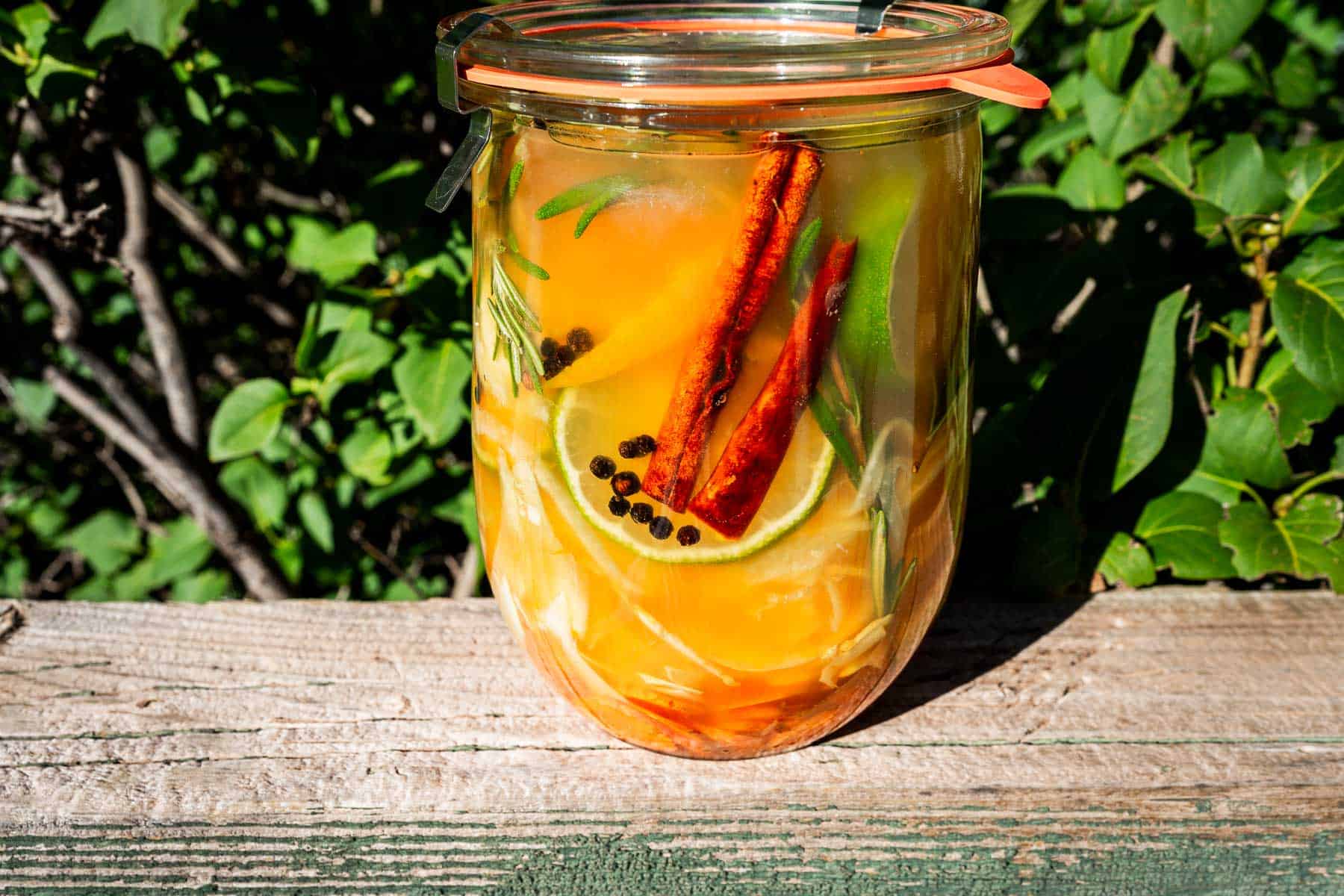
Making fire cider takes about 20 minutes of hands-on time. The rest is waiting. Here's an overview of the process, and the full instructions are in the recipe card.


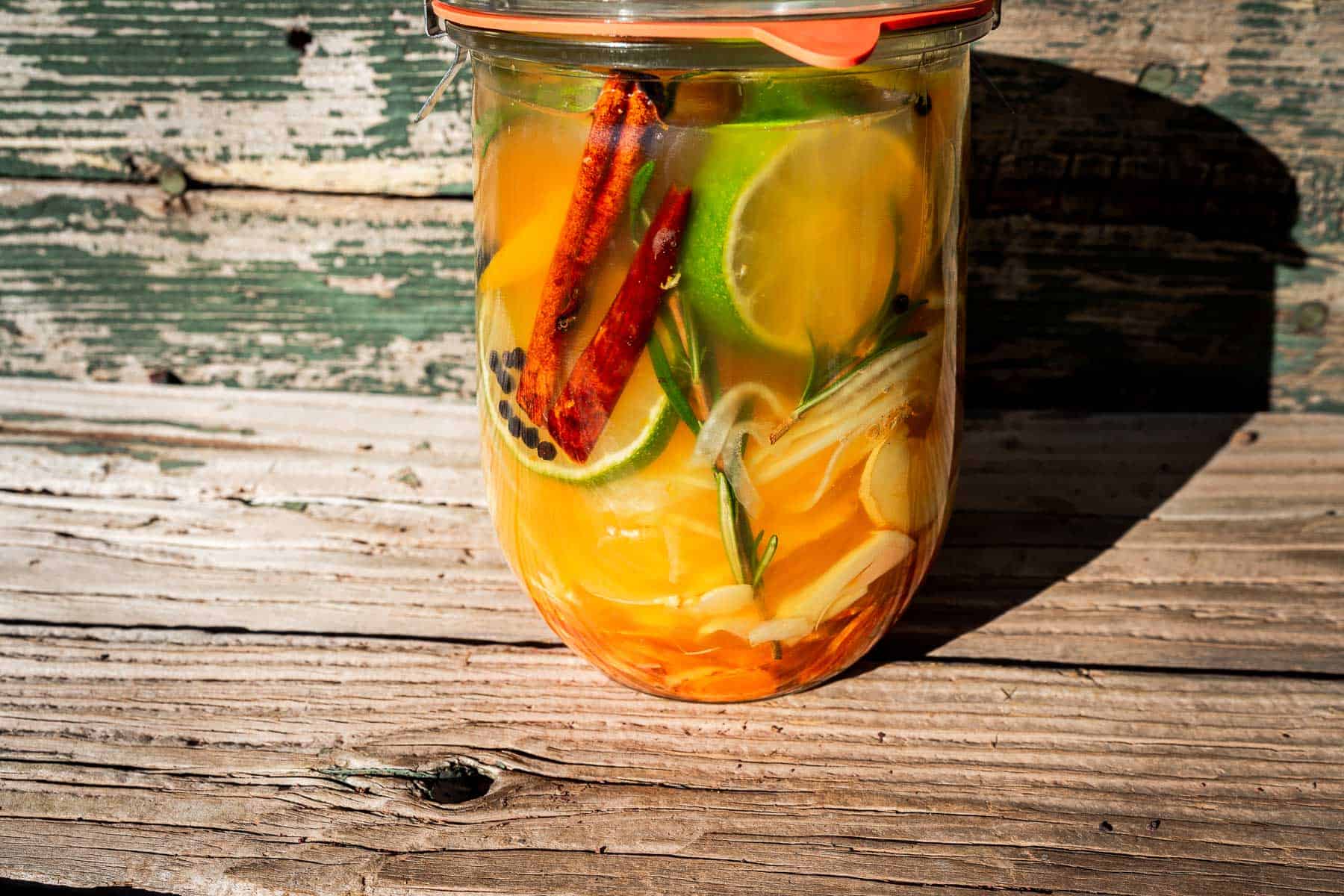
- Prep the ingredients. Scrub the roots and citrus well. Thinly slice the ginger, horseradish, turmeric, onion, and citrus, removing any seeds. Lightly crush the garlic and slice the dried cayenne peppers.
- Fill the jar. Add the roots, onion, garlic, and chiles to a clean 1-liter glass jar. Arrange the citrus slices around the inside, then add the rosemary, cinnamon stick, and peppercorns. Avoid packing too tightly.
- Cover with vinegar. Pour in enough apple cider vinegar to completely submerge everything, leaving ½ inch of headspace. Tap to release air bubbles.
- Seal and refrigerate. Cover with a nonreactive lid and refrigerate for 3 weeks, gently shaking every day or two. If using a metal lid, place parchment paper or an upside-down muffin liner between the jar and lid.
- Strain and sweeten. Strain through a fine-mesh sieve, pressing the solids to extract the liquid. Stir in honey to taste.
- Bottle it. Transfer to a clean glass bottle or jar and refrigerate. Enjoy!
How Long Should Fire Cider Infuse?
I let mine infuse in the refrigerator for 3 weeks. That's my sweet spot for a fire cider that's strongly flavored but still balanced. You can leave it for up to 5 weeks if you want to stretch it out. Taste it along the way with a clean spoon to see how it's developing.
You absolutely can infuse it in a dark, cool spot outside of the refrigerator too. This recipe is just my personal favorite version as far as flavor goes!
Do You Add Honey Before or After Infusing?
I add honey after straining. That way you can taste the finished fire cider and sweeten it exactly as much as you like. Start with about 1 tablespoon of honey per cup of strained fire cider and go from there. Some people prefer it barely sweetened, and others like it closer to a syrup.
Fire cider is vegetarian as written. To make it vegan, sweeten it with maple syrup instead of honey, or leave it unsweetened.
Why Does the Lid Matter?
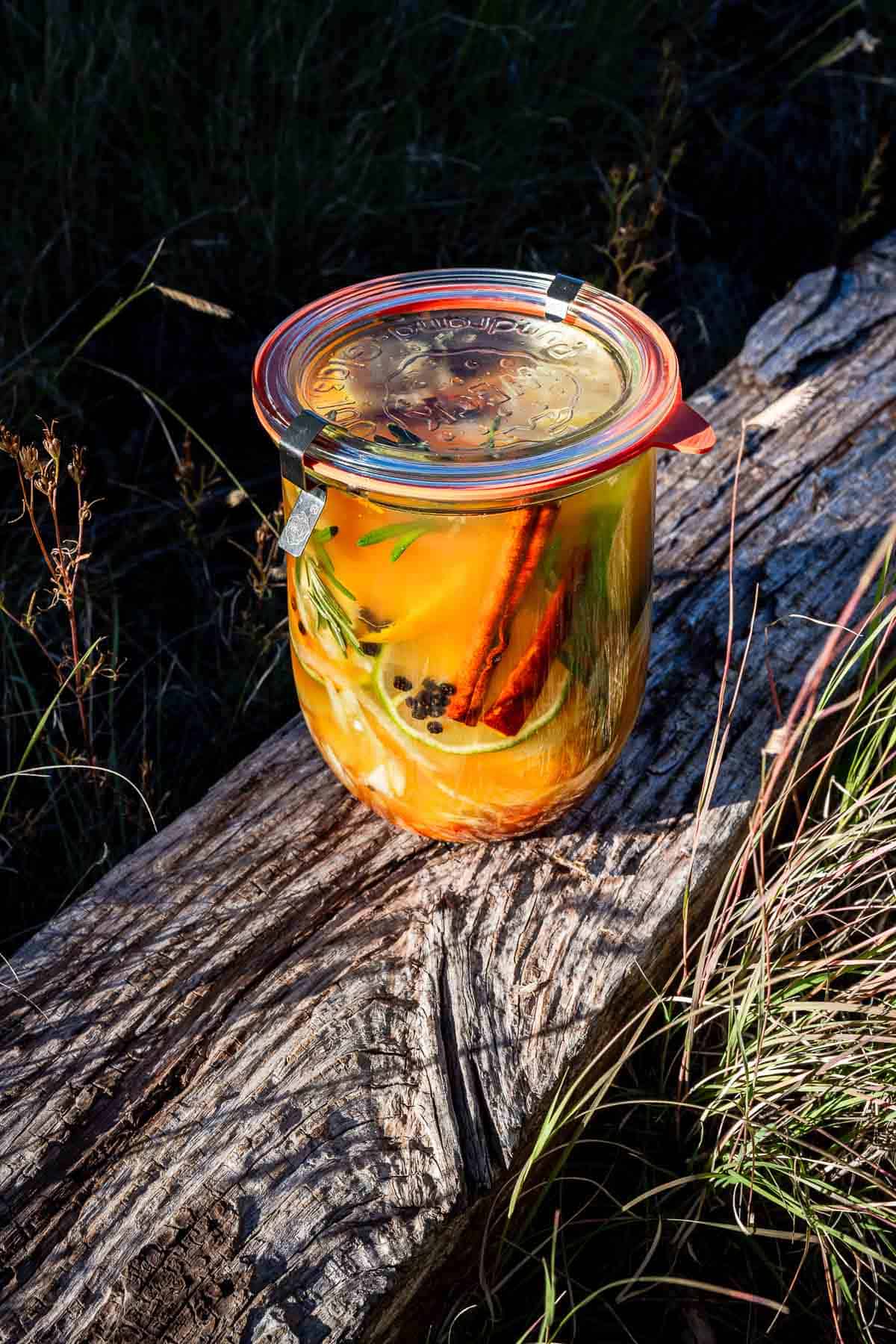
Apple cider vinegar is acidic and will corrode a plain metal lid over a few weeks, which can affect the flavor of your fire cider. Use a plastic storage lid, a glass Weck jar with a rubber seal in good condition, or another vinegar-safe, nonreactive lid. If you only have a metal canning lid, a piece of parchment paper between the jar and the lid can help, but a nonreactive lid is the better choice.
How to Use Fire Cider
The traditional way to take fire cider is a spoonful at a time, and I do that too. But I use it in the kitchen even more often. Anywhere you'd add a splash of vinegar, fire cider can usually step in. Here are some of the ways I like to use it, plus a few more ideas to try.
- Take it straight from a spoon, or follow it with a sip of water.
- Add a spoonful to a mug of hot tea with a little honey. It's especially good with ginger tea, plain black tea, or cinnamon tea.
- Stir a spoonful into hot water with a squeeze of lemon and a little honey for a simple drink.
- Use fire cider in place of vinegar in any salad vinaigrette. Whisk it with olive oil, a little honey, Dijon mustard, and a pinch of salt.
- Add a splash to a glass of sparkling water or ginger beer over ice for a spicy, tangy mocktail.
- Use it in a Bloody Mary, a michelada, a hot toddy, or a spicy margarita.
- Stir a spoonful into a finished pot of soup, chili, or beans to brighten it up right before serving.
- Drizzle it over roasted root vegetables, sweet potatoes, or Brussels sprouts as soon as they come out of the oven.
- Drizzle it over rice bowls, tacos, or beans and greens like you would hot sauce.
- Use it as the acid in a marinade for tofu, tempeh, mushrooms, or grilled vegetables.
- Toss shredded cabbage and carrots with fire cider, olive oil, a little honey, and salt to make a delicious slaw.
- Mix a little into good olive oil with flaky salt for dipping crusty bread.
- Use it in place of some of the lemon juice in hummus or bean dips for extra heat and depth.
How to Store Homemade Fire Cider
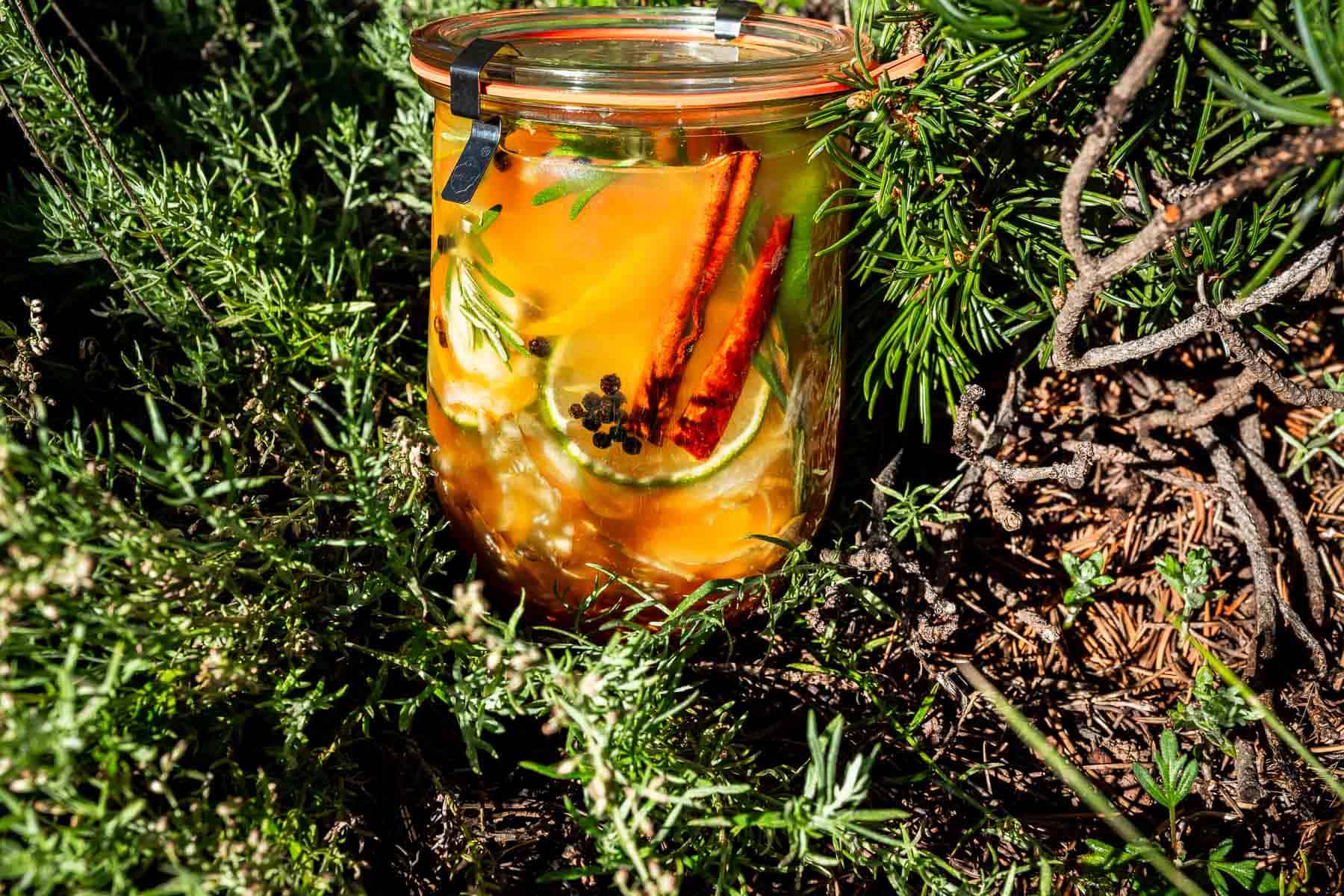
Store your strained fire cider in a clean glass bottle or jar with a tight, nonreactive lid in the refrigerator. Most fire cider will last for at least a few months and up to one year. Discard it if you notice mold, unusual bubbling, or off odors. Label your bottle with the date you strained it so you know how long it's been in the refrigerator.
Tips for the Best Fire Cider
- Keep everything submerged. Anything poking above the vinegar can spoil. If ingredients float up, push them back down with a clean utensil or remove a few solids.
- Use clean, dry equipment. Start with a clean, dry jar and use clean utensils every time you open it.
- Shake it often. Gently shaking or turning the jar every day or two helps the flavors infuse evenly.
- Press the solids. When you strain, press down on the solids to get every bit of liquid out. That's where a lot of the flavor is.
- Taste before sweetening. Every batch of roots is a little different, so taste the strained fire cider before adding honey.
More Herbal Kitchen Recipes
If you enjoy making fire cider, you might also like my homemade elderberry syrup, or these easy black walnut bitters, which use the same set-it-and-wait jar infusion method!
Homemade Fire Cider with Rosemary and Citrus
Follow Schisandra & Bergamot on Google Search
Equipment
- 1-liter glass jar with a vinegar-safe, nonreactive lid
- Fine-mesh sieve
- Glass bottle or jar for storage
Ingredients
- ½ cup fresh ginger thinly sliced
- ⅓ cup fresh horseradish thinly sliced
- ¼ cup fresh turmeric thinly sliced
- 1 medium yellow onion thinly sliced
- 4 garlic cloves lightly crushed
- 1 small mandarin orange thinly sliced
- 1 lemon thinly sliced
- 1 lime thinly sliced
- 3 dried cayenne peppers
- 3 small sprigs fresh rosemary
- 1 cinnamon stick
- ½ teaspoon whole black peppercorns
- 2 to 3 cups raw unfiltered apple cider vinegar (5% acidity), or enough to completely cover the ingredients
- Raw honey optional, to taste after straining
Instructions
- Thoroughly wash and scrub the fresh roots and citrus. There's no need to peel them. Thinly slice the ginger, horseradish, turmeric, onion, mandarin, lemon, and lime. Remove any citrus seeds. Lightly crush the garlic cloves.
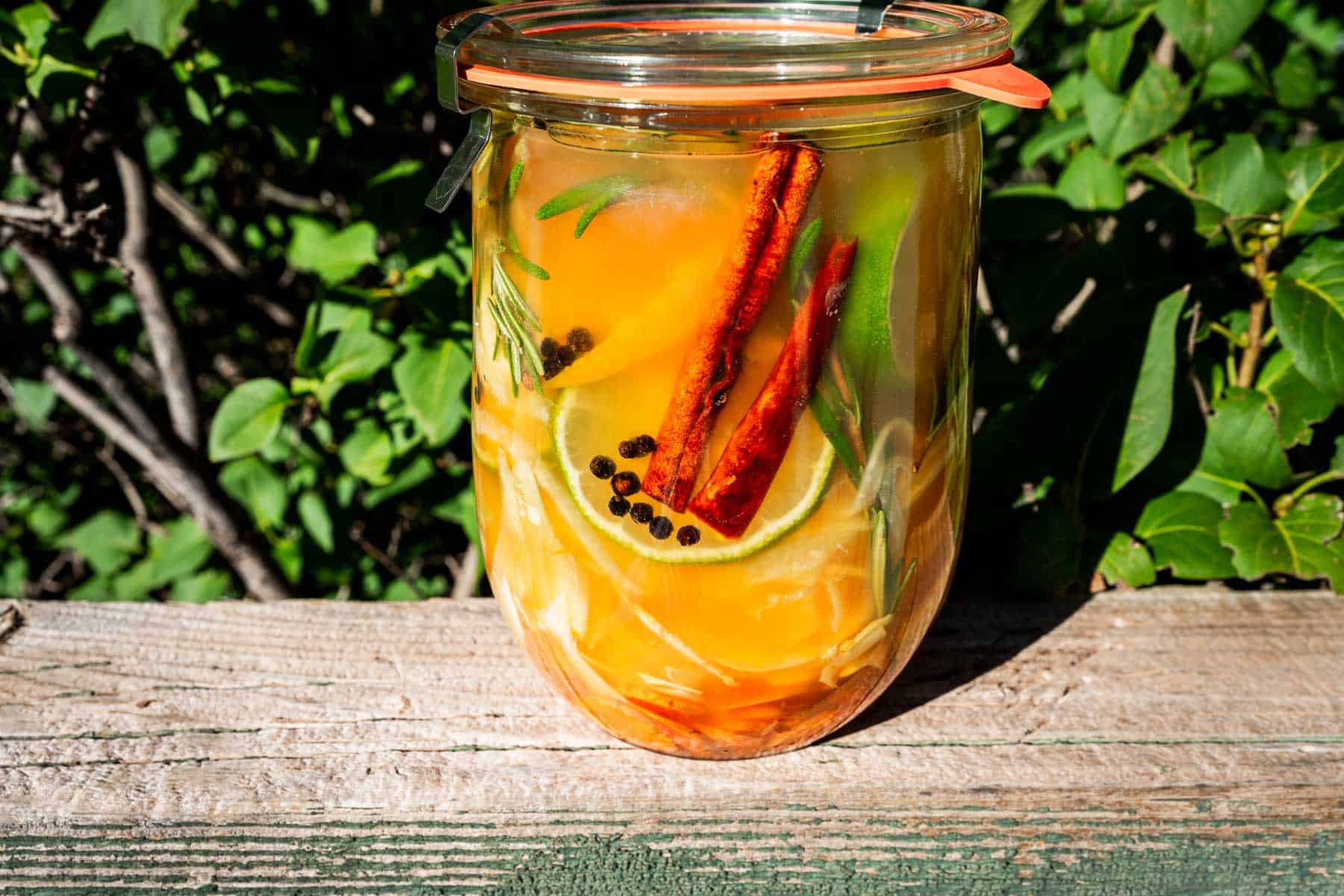
- Add the ginger, horseradish, turmeric, onion, garlic, and dried cayenne peppers to a clean, dry 1-liter glass jar. Arrange the mandarin, lemon, and lime slices along the inside of the jar, then tuck in the rosemary sprigs, cinnamon stick, and peppercorns. Avoid packing the ingredients too tightly.

- Slowly pour the apple cider vinegar over the ingredients until everything is completely submerged, leaving about ½ inch of headspace. Gently tap the jar or use a clean utensil to release any trapped air bubbles. Remove a few solids if needed to ensure complete coverage.

- Close the jar with a clean, vinegar-safe, nonreactive lid and refrigerate it. If using a Weck jar, ensure the rubber seal is in good condition and the jar is securely closed.
- Allow the mixture to infuse in the refrigerator for 3 weeks (or up to 5 weeks), gently shaking or turning the securely sealed jar every day or two. Keep all solids submerged beneath the vinegar.
- After 3 weeks, strain the fire cider through a fine-mesh sieve into a clean glass bowl or measuring jug. Gently press the solids to extract the flavorful liquid, then discard them.
- Sweeten, if desired. Stir in honey to taste, starting with approximately 1 tablespoon per cup of strained fire cider. Adjust according to your preference.
- Transfer the finished fire cider to a clean glass bottle or jar, seal tightly, and refrigerate. Enjoy!
Video
Notes
- Fresh horseradish is essential for fire cider's characteristic pungency. Thinly slicing it also makes straining easier.
- Fresh turmeric stains cutting boards, countertops, towels, and hands. Use a board you don't mind staining, or wear gloves.
- I prefer dried cayenne peppers over fresh in fire cider because I find they pack a better punch! Having said, you absolutely could use a few fresh chiles instead.
- Use apple cider vinegar labeled 5% acidity. Add enough to keep all ingredients fully submerged throughout infusion.
- For a vegan variation, use maple syrup instead of honey.
- If using a metal lid, place a piece of parchment paper or an upside-down muffin liner between the jar and the lid.



Comments
No Comments