
• Skip to main content
  • Skip to primary sidebar

Schisandra & Bergamot logo

menu icon
go to homepage
  • Index
  • Subscribe
  • About
  • Contact
  • Daily Herb
    • Facebook
    • Instagram
    • Pinterest
  • subscribe
    search icon
    Homepage link
    • Index
    • Subscribe
    • About
    • Contact
    • Daily Herb
    • Facebook
    • Instagram
    • Pinterest
  • ×
    Home » Trending

    Published: Sep 5, 2025 by Kristen Wood · This post may contain affiliate links. If you make a purchase through links on our site, we may earn a commission. ·

    How to Keep Potted Herbs Growing Indoors Through Winter

    13 shares
    • Facebook
    • Reddit

    Just because the temperatures drop doesn’t mean you have to give up fresh herbs. With the right care, you can bring your favorite garden staples indoors and keep them thriving all winter long. From basil to rosemary, these tips will help you enjoy fresh flavor even during the coldest months.

    Indoor herb growing isn’t complicated—it just takes a little planning and attention. Here are practical ways to keep your potted herbs happy and productive through winter.

    Choose the Right Herbs
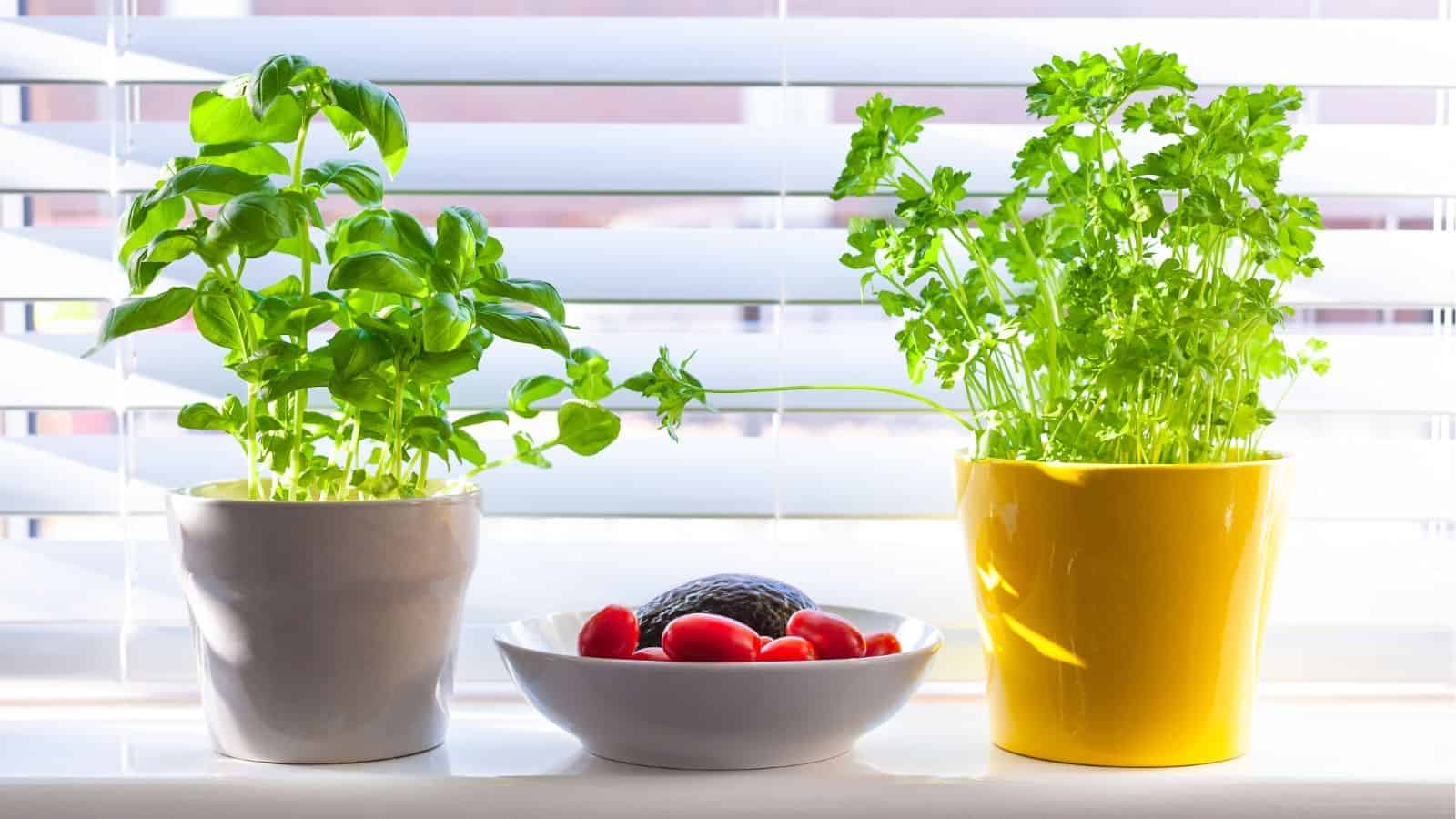
    Two potted herbs and a bowl with an avocado and grape tomatoes are placed on a windowsill in front of white blinds.
    Photo Credit: jakub_rutkiewicz/Envato

    Not all herbs adapt easily to indoor life, so pick ones that thrive in pots. Basil, mint, parsley, thyme, and chives are all great choices for growing indoors. Hardy herbs like rosemary and oregano can also do well with a little extra care.

    Give Them Enough Light

    Green seedlings growing in clear containers are illuminated by bright sunlight, with leaves and stems clearly visible against the sky.
    Photo Credit: TDyuvbanova/Envato

    Herbs need plenty of sunlight, even indoors. Place pots near a south-facing window for maximum natural light. If daylight is limited, supplement with a simple grow light to keep them healthy.

    HERB OF THE DAY · Explore today’s herb →

    Use Well-Draining Soil

    A person scoops dark compost into a green plastic container using a small green garden trowel.
    Photo Credit: AndersonPiza/Envato

    Soil that holds too much moisture can cause root rot. Choose a high-quality potting mix with good drainage to keep herbs strong. Adding a little perlite or sand can improve airflow around the roots.

    Watch Your Watering

    A hand holds a white pitcher to water a potted succulent plant indoors.
    Photo Credit: Kevin Malik/Pexels

    It’s easy to overwater herbs when they’re indoors. Let the top inch of soil dry out before watering again. Most herbs prefer slightly dry conditions rather than soggy roots.

    Maintain Proper Humidity

    A hand tends to a potted herb plant on a table, with two other potted plants, a small glass bottle of water, and gardening tools nearby.
    Photo Credit: MargJohnsonVA/Envato

    Winter air inside your home can be very dry, which stresses herbs. Mist the leaves occasionally or place a tray of water nearby to increase humidity. Grouping herbs together also helps create a microclimate.

    Keep Temperatures Consistent

    A hand holds a digital hygrometer showing 26% humidity and 25.2°C, next to a yellow plant pot with green leaves.
    Photo Credit: Simol1407/Envato

    Most herbs like the same indoor temperatures you do—around 65 to 75°F. Avoid placing pots near drafty windows or heating vents. Consistency is key to keeping them from going into shock.

    Pinch and Harvest Regularly

    A person in a striped shirt and apron tends to a basil plant in a white pot against a plain background.
    Photo Credit: tenkende/Envato

    Frequent trimming encourages herbs to grow fuller and healthier. Snip leaves from the top to keep plants from getting leggy. Harvesting regularly also ensures you’ll always have fresh herbs at hand.

    Repot When Needed

    A person fills a small terracotta pot with soil using a small trowel, preparing to pot a green plant on a table indoors.
    Photo Credit: Anna Shvets/Pexels

    If your herbs outgrow their containers, give them more space. Transplant into slightly larger pots with fresh soil to refresh nutrients. A little extra room can keep them producing longer.

    Fertilize Lightly

    Two people wearing gloves hold a potted plant and a handful of pink granular fertilizer in a greenhouse.
    Photo Credit: RossHelen/Envato

    Indoor herbs don’t need much fertilizer, but a little boost helps. Use a diluted liquid fertilizer every few weeks during the growing season. Too much can make the plants weak or affect flavor.

    Rotate Pots Frequently

    A person places a leafy green plant into a small biodegradable pot, with several empty pots arranged on a wooden table.
    Photo Credit: nadzeyakolabava/Envato

    Herbs tend to lean toward the light source. Rotate pots every few days to keep growth even and upright. This also ensures all sides of the plant get enough light.

    With just a few adjustments, you can enjoy a steady supply of fresh herbs all winter long. These simple steps make it easy to keep your potted plants healthy, flavorful, and ready for cooking year-round.

    More Trending

    • A woman talking on a cell phone.
      15 overlooked spots in your home that need winter attention
    • Person holding a potted plant and a spray bottle stands in a kitchen with green cabinetry and wooden shelves in the background.
      15 indoor gardening habits that pay off year-round
    • An older woman and a young girl sit on a couch smiling at each other while looking at an open book in the girl's lap.
      15 practical skills grandparents learned early that still matter
    • A woman in an apron holds a potted plant in one hand and makes a peace sign with the other, standing against a pink background.
      15 plants that symbolize renewal, rest, and winter wisdom

    About Kristen Wood

    Kristen is a plant lover, gardener, certified functional nutritional expert, cookbook author, writer, and photographer. Her work has been featured in many online and print publications including Willow & Sage Magazine, Forbes, NBC, New York Daily News, Healthline, MSN, Elle, Yoga Journal, and many more. She is also a syndicated writer for The Associated Press.

    Reader Interactions

    Comments

    No Comments

    Leave a Reply Cancel reply

    Your email address will not be published. Required fields are marked *

    Recipe Rating


    Primary Sidebar

    A close up of a woman's face in the sun, radiating with the gentle glow of schisandra and bergamot home.

    About Kristen Wood

    Kristen is a plant lover, gardener, certified functional nutritional expert, cookbook author, writer, and photographer. Her work has been featured in many online and print publications including Willow & Sage Magazine, Forbes, NBC, New York Daily News, Healthline, MSN, Elle, Yoga Journal, and many more. She is also a syndicated writer for The Associated Press.

    Learn more about me →

    Herb of the Day

    Meet today’s featured herb with gentle kitchen ideas, botanical notes, folklore, and a quiet reflection to take with you.

    Explore Today’s Herb

    Follow us!

    Footer

    ↑ back to top

    About

    • Privacy Policy
    • Google Web Stories
    • Accessibility Statement
    • Disclaimer

    Newsletter

    • Sign up for our newsletter to receive our latest posts!

    Contact

    • Contact

    Copyright © 2026 Schisandra & Bergamot
    Disclaimer: As An Amazon Associate I Earn From Qualifying Purchases.

    Herb of the Day

    Discover today’s featured herb with simple kitchen ideas, botanical notes, folklore, and a reflective message.

    Explore
    13 shares