
• Skip to main content
  • Skip to primary sidebar

Schisandra & Bergamot logo

menu icon
go to homepage
  • Index
  • Subscribe
  • About
  • Contact
  • Daily Herb
    • Facebook
    • Instagram
    • Pinterest
  • subscribe
    search icon
    Homepage link
    • Index
    • Subscribe
    • About
    • Contact
    • Daily Herb
    • Facebook
    • Instagram
    • Pinterest
  • ×
    Home » Trending

    Published: Nov 14, 2025 by Kristen Wood · This post may contain affiliate links. If you make a purchase through links on our site, we may earn a commission. ·

    15 methods for drying and storing herbs through winter

    0 shares
    • Facebook
    • Reddit

    As the growing season fades and the chill of winter sets in, preserving your herbs ensures that the flavors and fragrances of your garden last all year long. Drying and storing herbs is simple, satisfying, and a wonderful way to stay connected to your garden even when it’s resting.

    Whether you grow them on your windowsill or in your backyard, properly preserved herbs can elevate winter teas, soups, and remedies. Here are 15 tried-and-true methods for drying and storing herbs through winter—each one helping you keep a little taste of summer sunshine in every jar.

    Air Drying Bundles

    Bundles of various dried herbs hang from a string above a table with jars, sacks, a mortar and pestle, and essential oil bottles, set outdoors under a blue sky.
    Photo Credit: yanadjana/Envato

    Tie small bunches of herbs with twine and hang them upside down in a cool, dry place. Air drying is one of the simplest, most traditional methods that preserves both scent and color. In a few weeks, you’ll have crisp leaves ready for storage.

    Using a Dehydrator

    Fresh and partially dried green herbs laid out on a round plastic tray inside a food dehydrator.
    Photo Credit: Juliedeshaies/Deposit Photos

    A dehydrator speeds up the drying process while maintaining quality. Set it to a low temperature and spread herbs in a single layer. This method works beautifully for moisture-heavy herbs like basil and mint.

    Oven Drying
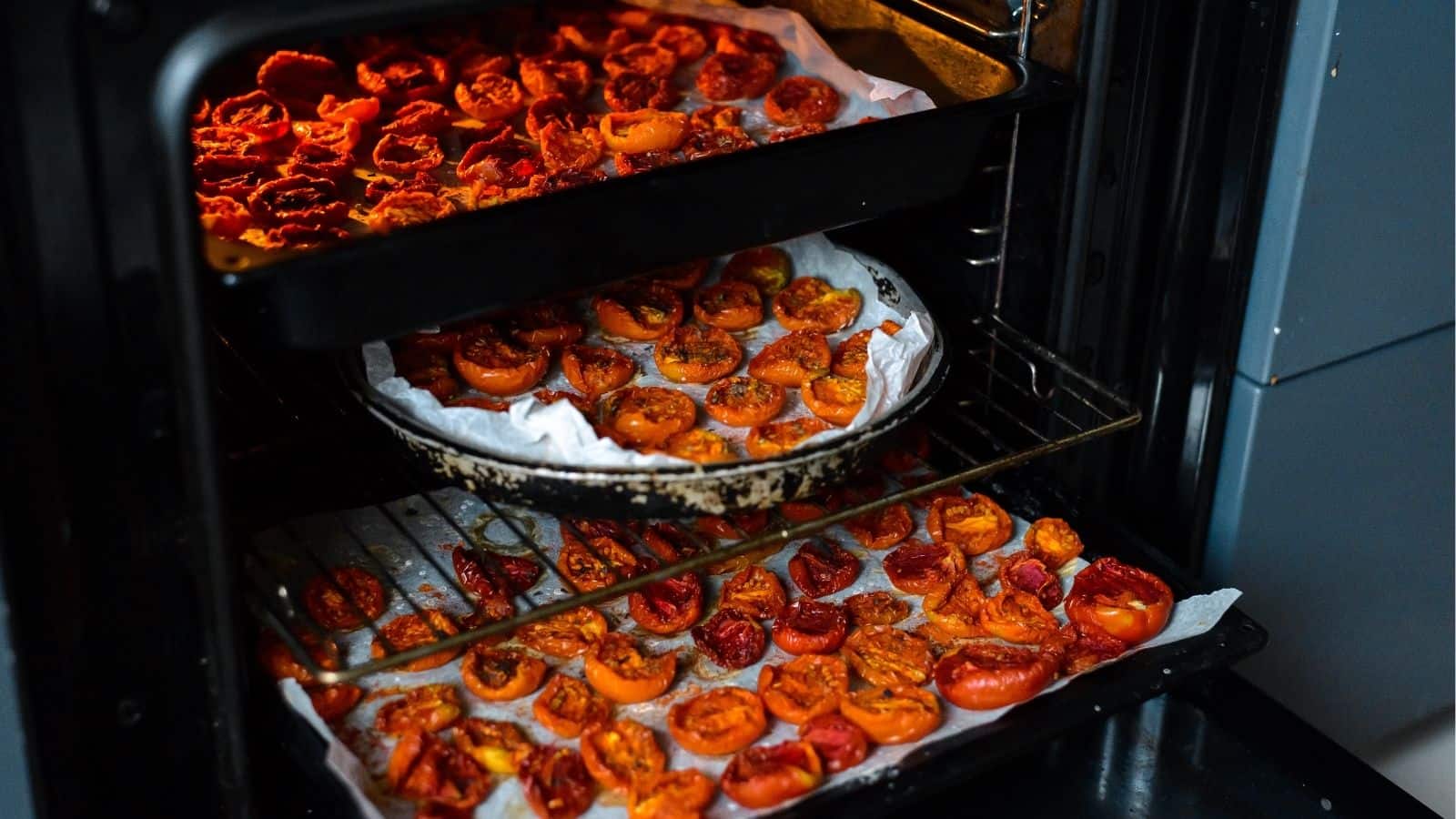
    Three oven racks holding trays lined with parchment paper, each filled with halved tomatoes being roasted.
    Photo Credit: stenvlad/Envato

    Place herbs on a baking sheet and dry them in the oven on the lowest setting with the door slightly open. This technique works well when you need herbs ready quickly. Just be sure to watch carefully—herbs can over-dry fast.

    Microwave Drying for Small Batches

    A modern kitchen features a built-in stainless steel microwave and oven, brown cabinets, potted plants, candles, and stacked black cups on the countertop.
    Photo Credit: IdaT/Pixabay

    For a speedy option, microwave herbs between paper towels in short bursts. It’s ideal for small amounts or delicate herbs. The key is low heat and patience to prevent burning.

    Drying with a Hanging Rack

    A wooden frame with rows of circular, uncooked snacks or food items drying on a mesh surface, placed on a concrete floor.
    Photo Credit: MuchlisNugroho/Deposit Photos

    Use a mesh drying rack or herb-drying net to allow full air circulation. It’s a space-efficient way to dry multiple varieties at once. Herbs dry evenly and retain their bright aroma.

    Window Screen Method

    A person cleaning a window screen with a yellow sponge against a brick wall background.
    Photo Credit: thefutureis/Deposit Photos

    Spread herbs over a clean window screen elevated on blocks for airflow. This method is perfect for sunny, breezy rooms. The natural warmth helps herbs dry gently without direct sunlight damage.

    Paper Bag Drying

    A potted basil plant in a crumpled paper bag sits on a dark gray surface with a few leaves scattered nearby against a gray background.
    Photo Credit: duskbabe/Envato

    Place herb sprigs inside a paper bag with holes poked for ventilation, then hang it upside down. This prevents dust and light exposure. Labeling each bag makes organizing multiple herbs simple.

    Drying in a Car (on a Warm Day)

    A white two-door coupe car is parked in a concrete-walled area, viewed from the side at a slight angle.
    Photo Credit: Trimitrius/Deposit Photos

    On a warm, dry day, place herbs on a tray inside your parked car. The gentle heat acts like a mini solar dehydrator. You’ll have fragrant, dried herbs in just a few hours.

    Freeze-Drying at Home

    Close-up view of three rectangular metal trays stacked horizontally inside a glass-fronted enclosure, possibly part of an industrial or laboratory machine.
    Photo Credit: denizunlusu/iStock

    If you have access to a freeze-dryer, this method preserves flavor and nutrients exceptionally well. The herbs retain their color and fragrance almost like fresh. It’s ideal for culinary or medicinal herbs.

    Freezing in Ice Cubes

    Frozen cubes of green pesto on a wooden cutting board with a clear plastic bag and fresh basil leaves beside them.
    Photo Credit: qwartm/Deposit Photos

    Chop herbs and pack them into ice cube trays with olive oil or water, then freeze. Pop out a cube whenever you need fresh flavor in cooking. It’s a perfect solution for basil, parsley, or cilantro.

    Salt or Sugar Preservation

    A glass jar filled with coarse salt mixed with herbs, mainly rosemary, sits on a wooden surface with fresh rosemary sprigs scattered around.
    Photo Credit: Olga_Kochina/Envato

    Layer herbs like mint or rosemary with salt or sugar in a jar. The crystals draw out moisture and preserve their essence beautifully. Use the flavored salt or sugar later for seasoning or baking.

    Herb-Infused Oils

    Three glass jars filled with infused oils containing herbs and spices, with garlic, chili peppers, salt, and rosemary on a rustic wooden surface.
    Photo Credit: Wavebreakmedia/Envato

    Dry herbs slightly before steeping them in olive or carrier oil. Store the bottles in a cool, dark spot for infused oils that last months. They’re lovely for cooking, skincare, or homemade gifts.

    Herb-Infused Vinegars

    A glass bottle with mint-infused water sits next to a tray of twisted pastries on a wooden counter.
    Photo Credit: dolgachov/Envato

    Combine herbs with vinegar in glass jars, let steep for a few weeks, and strain. The tangy infusion preserves both flavor and aroma. Perfect for salad dressings or marinades during winter months.

    Storing in Glass Jars

    A glass jar with a gold lid filled with dried herbs is placed on a turquoise wooden surface with a matching wooden background.
    Photo Credit: akulamatiau/Deposit Photos

    Once herbs are fully dried, crumble and store them in airtight glass jars. Keep them in a dark cupboard away from sunlight. Label each jar with the herb name and date for easy use all season long.

    Storing Whole Leaves Instead of Crushed
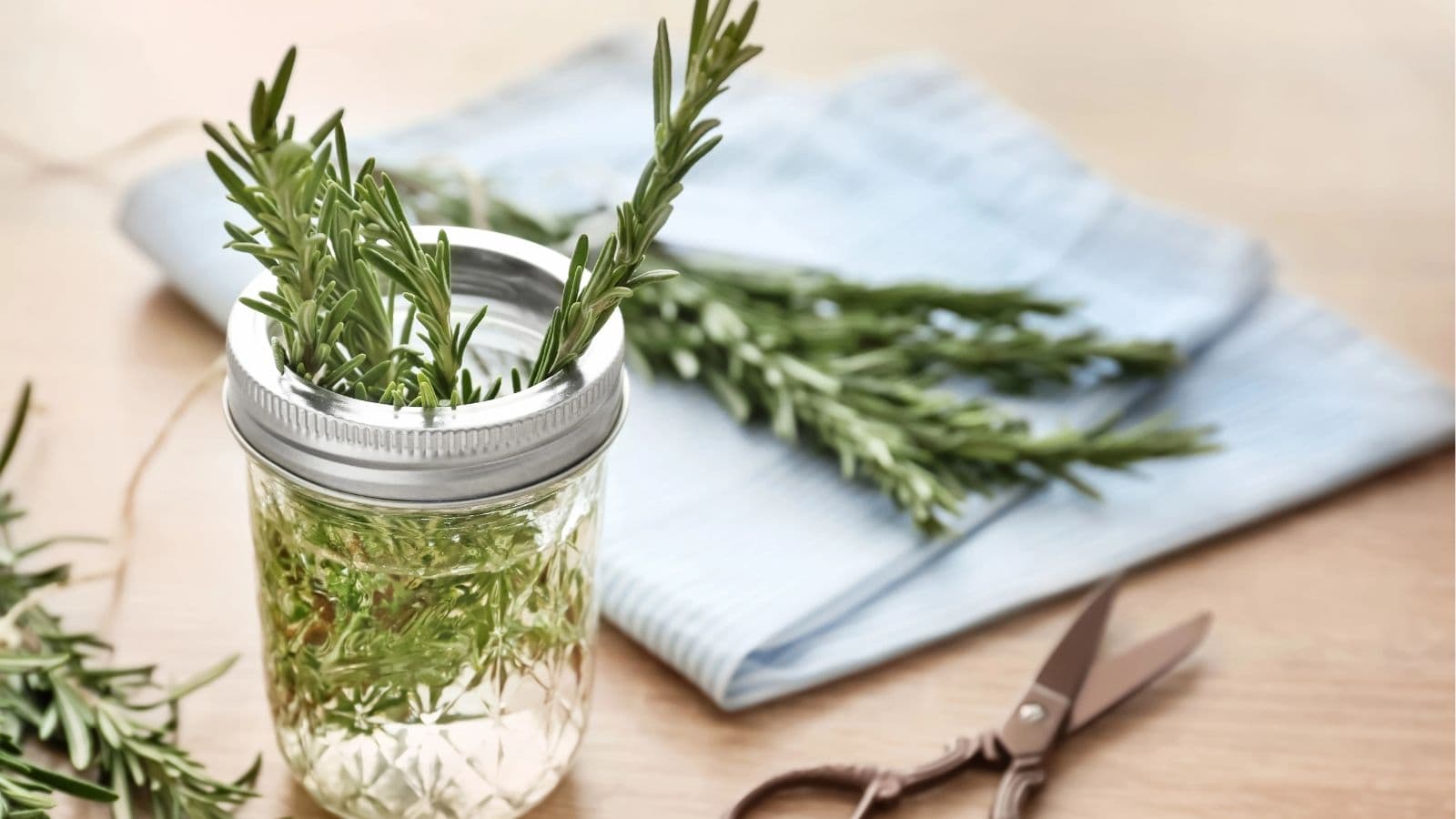
    A jar with fresh rosemary sprigs in water sits on a table next to folded blue cloth and a pair of scissors.
    Photo Credit: serezniy/Deposit Photos

    Keep herbs whole until you’re ready to use them—this preserves oils and potency longer. Crush gently between your fingers right before adding to dishes or teas. The burst of scent is worth the wait.

    Preserving herbs is more than just a practical task—it’s a mindful way to honor your garden’s gifts. With these methods, you can fill your home with the scents of summer even on the coldest days. A little care now means a pantry full of warmth, flavor, and herbal magic all winter long.

    More Trending

    • A woman in winter clothing sits cross-legged on a sofa, holding a yellow apple in one hand and a white mug in the other, and smiling at the camera.
      15 simple slow-living ideas to help you ease into the colder months
    • A gazelle stands in tall, dry grass with several other gazelles in the background.
      15 small outdoor habits that support wildlife all winter
    • Woman standing in a modern kitchen, smiling and pointing at a wall-mounted touchscreen control panel with various smart home icons displayed.
      15 easy ways to keep energy costs down this season
    • A man in work overalls stands in a kitchen, scratching his head in confusion while looking at pipes and tools on the counter.
      15 winter home maintenance tasks you’ll be glad you handled early

    About Kristen Wood

    Kristen is a plant lover, gardener, certified functional nutritional expert, cookbook author, writer, and photographer. Her work has been featured in many online and print publications including Willow & Sage Magazine, Forbes, NBC, New York Daily News, Healthline, MSN, Elle, Yoga Journal, and many more. She is also a syndicated writer for The Associated Press.

    Reader Interactions

    Comments

    No Comments

    Leave a Reply Cancel reply

    Your email address will not be published. Required fields are marked *

    Recipe Rating


    Primary Sidebar

    A close up of a woman's face in the sun, radiating with the gentle glow of schisandra and bergamot home.

    About Kristen Wood

    Kristen is a plant lover, gardener, certified functional nutritional expert, cookbook author, writer, and photographer. Her work has been featured in many online and print publications including Willow & Sage Magazine, Forbes, NBC, New York Daily News, Healthline, MSN, Elle, Yoga Journal, and many more. She is also a syndicated writer for The Associated Press.

    Learn more about me →

    Herb of the Day

    Meet today’s featured herb with gentle kitchen ideas, botanical notes, folklore, and a quiet reflection to take with you.

    Explore Today’s Herb

    Follow us!

    Footer

    ↑ back to top

    About

    • Privacy Policy
    • Google Web Stories
    • Accessibility Statement
    • Disclaimer

    Newsletter

    • Sign up for our newsletter to receive our latest posts!

    Contact

    • Contact

    Copyright © 2025 Schisandra & Bergamot
    Disclaimer: As An Amazon Associate I Earn From Qualifying Purchases.

    Herb of the Day

    Discover today’s featured herb with simple kitchen ideas, botanical notes, folklore, and a reflective message.

    Explore
    0 shares