

• Skip to main content
  • Skip to primary sidebar

Schisandra & Bergamot logo

menu icon
go to homepage
  • Index
  • Subscribe
  • About
  • Contact
  • Daily Herb
    • Facebook
    • Instagram
    • Pinterest
  • subscribe
    search icon
    Homepage link
    • Index
    • Subscribe
    • About
    • Contact
    • Daily Herb
    • Facebook
    • Instagram
    • Pinterest
  • ร—
    Home ยป Trending

    Published: Nov 20, 2025 by Kristen Wood ยท This post may contain affiliate links. If you make a purchase through links on our site, we may earn a commission. ยท

    15 ways to create habitat for backyard birds

    0 shares
    • Facebook
    • Reddit

    Inviting birds into your backyard starts with creating a habitat that feels safe, nourishing, and welcoming. With just a few thoughtful changes, your outdoor space can become a lively sanctuary for local bird species.

    These simple ideas help support wildlife while bringing more song and movement into your days.

    Plant Native Trees and Shrubs

    Person in green overalls and gloves standing in a garden, holding pruning shears, surrounded by various green bushes and plants.
    Photo Credit: duallogic/Envato

    Native plants provide the food, shelter, and nesting materials birds naturally rely on. They support insects that many birds need for feeding their young. Choosing native plants is one of the most effective ways to attract diverse species.

    Add Layers of Vegetation

    A variety of potted indoor and outdoor plants arranged on the ground and hanging from baskets in a garden setting.
    Photo Credit: Simol1407/Envato

    Birds feel safest in yards with multiple heightsโ€”ground cover, shrubs, and trees. Layered spaces mimic natural habitats. This structure gives them places to hide, perch, and forage.

    Provide Fresh Water

    A bamboo pipe pours water into a stone basin surrounded by moss and green plants in a natural outdoor setting.
    Photo Credit: leungchopan/Envato

    A birdbath, shallow dish, or even a clean bowl offers essential drinking and bathing water. Keeping it clean and refilling it regularly makes your yard more inviting. Water sources attract species that may not visit feeders.

    Offer a Variety of Bird Feeders

    Three small birds perch on a cylindrical bird feeder with seeds, while a fourth bird clings to a mesh sock feeder against a blurred brown background.
    Photo Credit: bandd/Deposit Photos

    Different birds prefer different feeder styles, such as platform, tube, or suet feeders. Providing variety increases the number of species that feel comfortable visiting. It also keeps your backyard lively year-round.

    Plant Berry-Producing Bushes

    A dense bush with clusters of ripe and unripe blueberries among green leaves outdoors.
    Photo Credit: photohampster/Deposit Photos

    Berries provide essential winter food for birds when insects are scarce. Shrubs like elderberry, holly, and serviceberry offer both nutrition and shelter. They also add natural beauty to your yard.

    Leave Seed Heads on Flowers

    Photo Credit: lucky_ch/Envato

    Instead of cutting back flowers too early, let seed heads stay through fall and winter. Birds like finches and sparrows rely on those seeds. Itโ€™s an easy, hands-off way to support wildlife.

    Create Brush Piles

    A pile of dry branches and two wooden pallets are stacked on sandy ground in a grassy outdoor area with trees in the background.
    Photo Credit: ja-aljona/Envato

    Brush piles made from fallen branches offer hiding spots and nesting materials. They make your yard feel more natural and safe for small birds. Even a small pile can attract new visitors.

    Reduce Lawn Size

    A well-maintained front yard features a lush green lawn, circular flower beds with colorful blooms, and a porch with potted plants in front of a house.
    Photo Credit: fotomine/Deposit Photos

    Large, empty lawns offer little food or protection for birds. Replacing sections with garden beds, native plants, or groundcovers supports more species. This simple change helps transform your yard into a living ecosystem.

    Avoid Chemical Pesticides

    A person wearing a hat, mask, gloves, and long-sleeved clothes sprays trees with a liquid in a garden or orchard, surrounded by greenery and a wire fence.
    Photo Credit: Gustavo Fring/Pexels

    Pesticides reduce insect populations, which many birds depend on. Preventing chemical use keeps your yard healthier and more bird-friendly. Natural methods allow ecosystems to balance themselves.

    Add Nesting Boxes
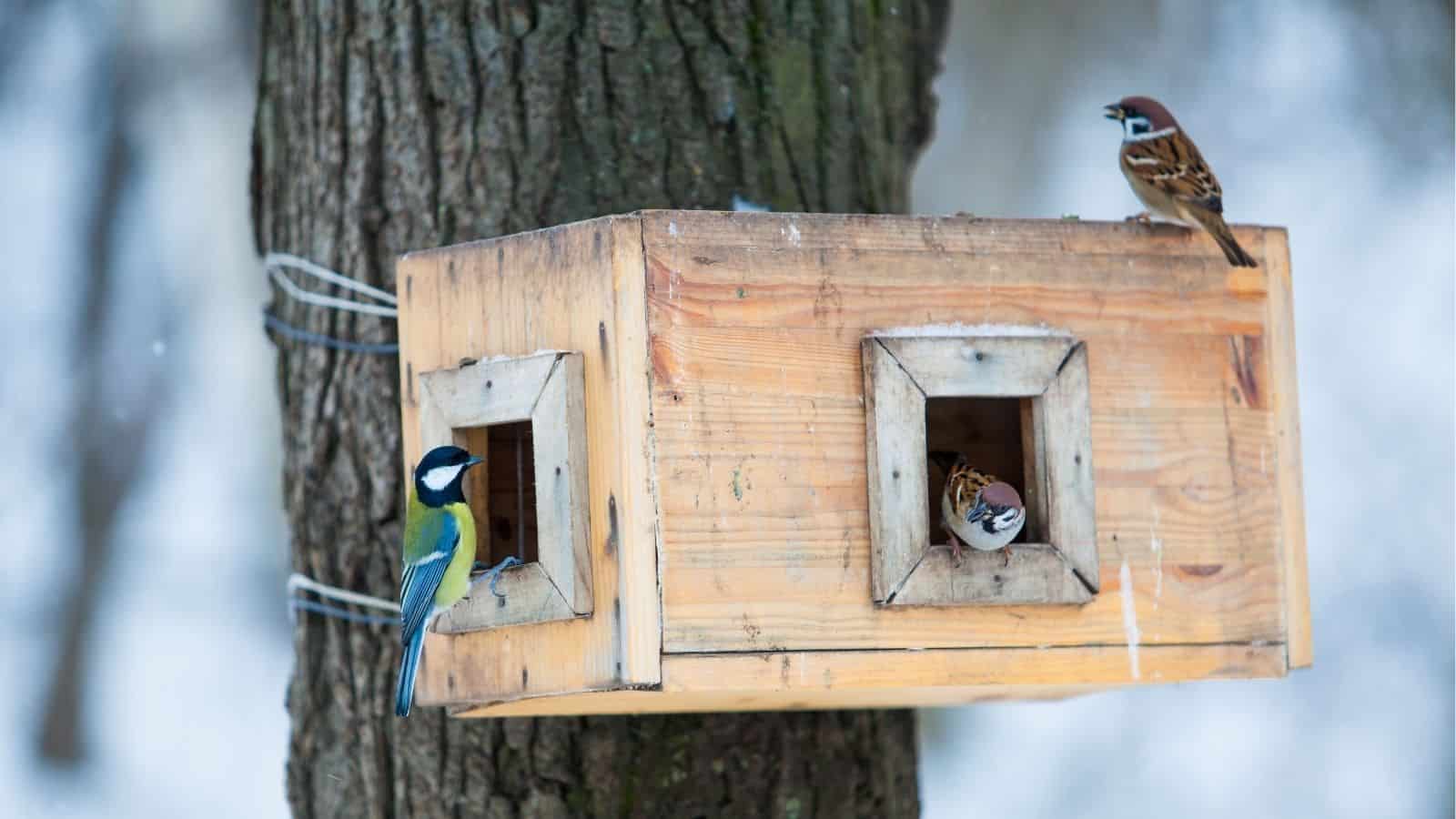
    A wooden birdhouse attached to a tree with three birds perched around its openings in a wintery outdoor setting.
    Photo Credit: EwaStudio/Envato

    Nesting boxes provide safe places for birds that struggle to find natural cavities. They help species like bluebirds, chickadees, and wrens thrive. Placing them in quiet areas increases your success.

    Leave Leaf Litter on the Ground

    A variety of dry autumn leaves in shades of yellow, brown, and green scattered on the ground.
    Photo Credit: Arcaion/Pixabay

    Leaf litter shelters insects, worms, and beetles that birds love to eat. It also provides natural ground cover and nesting material. A messy corner of the yard can be a haven for biodiversity.

    Keep Cats Indoors

    Three cats sit inside a pet carrier with the door open, looking out in different directions in a room with yellow walls.
    Photo Credit: Leove/Deposit Photos

    Outdoor cats are one of the biggest threats to songbirds. Keeping them inside protects both wildlife and the cats themselves. It ensures birds feel safe enough to visit and nest.

    Offer Natural Nesting Materials

    A birdโ€™s nest made of twigs, moss, and grass sits among branches on the ground with green grass visible in the background.
    Photo Credit: WoodysPhotos/Deposit Photos

    Provide twigs, dried grasses, and small clumps of moss around your yard. Birds gather these materials to build strong nests. Avoid offering synthetic fibers, as they can be harmful.

    Choose Plants That Attract Insects

    Close-up of slender green stems with small yellow flower buds against a blurred green background.
    Photo Credit: Nennieinszweidrei/Pixabay

    Birds depend on insects for protein, especially during breeding season. Plants like goldenrod, asters, and native grasses support healthy insect populations. More insects mean more birds.

    Create Quiet Spaces in Your Yard

    A landscaped garden with winding stone paths, small garden lights, various plants, and trees, with modern houses visible in the background.
    Photo Credit: diczman/Envato

    Birds prefer areas with minimal disturbance for nesting and feeding. A corner with thick shrubs or a sheltered garden bed can become a peaceful sanctuary. Quiet zones help them feel safe enough to stay year-round.

    Supporting backyard birds doesnโ€™t require major changesโ€”just a series of thoughtful, nature-friendly choices. These simple steps help birds find food, shelter, and safety right outside your door. As your habitat grows, so will the joy and life it brings to your space.

    More Trending

    • A woman in winter clothing sits cross-legged on a sofa, holding a yellow apple in one hand and a white mug in the other, and smiling at the camera.
      15 simple slow-living ideas to help you ease into the colder months
    • A gazelle stands in tall, dry grass with several other gazelles in the background.
      15 small outdoor habits that support wildlife all winter
    • Woman standing in a modern kitchen, smiling and pointing at a wall-mounted touchscreen control panel with various smart home icons displayed.
      15 easy ways to keep energy costs down this season
    • A man in work overalls stands in a kitchen, scratching his head in confusion while looking at pipes and tools on the counter.
      15 winter home maintenance tasks youโ€™ll be glad you handled early

    About Kristen Wood

    Kristen is a plant lover, gardener, certified functional nutritional expert, cookbook author, writer, and photographer. Her work has been featured in many online and print publications including Willow & Sage Magazine, Forbes, NBC, New York Daily News, Healthline, MSN, Elle, Yoga Journal, and many more. She is also a syndicated writer for The Associated Press.

    Reader Interactions

    Comments

    No Comments

    Leave a Reply Cancel reply

    Your email address will not be published. Required fields are marked *

    Recipe Rating


    Primary Sidebar

    A close up of a woman's face in the sun, radiating with the gentle glow of schisandra and bergamot home.

    About Kristen Wood

    Kristen is a plant lover, gardener, certified functional nutritional expert, cookbook author, writer, and photographer. Her work has been featured in many online and print publications including Willow & Sage Magazine, Forbes, NBC, New York Daily News, Healthline, MSN, Elle, Yoga Journal, and many more. She is also a syndicated writer for The Associated Press.

    Learn more about me โ†’

    Herb of the Day

    Meet todayโ€™s featured herb with gentle kitchen ideas, botanical notes, folklore, and a quiet reflection to take with you.

    Explore Todayโ€™s Herb

    Follow us!

    Footer

    โ†‘ back to top

    About

    • Privacy Policy
    • Google Web Stories
    • Accessibility Statement
    • Disclaimer

    Newsletter

    • Sign up for our newsletter to receive our latest posts!

    Contact

    • Contact

    Copyright ยฉ 2025 Schisandra & Bergamot
    Disclaimer: As An Amazon Associate I Earn From Qualifying Purchases.

    Herb of the Day

    Discover todayโ€™s featured herb with simple kitchen ideas, botanical notes, folklore, and a reflective message.

    Explore
    0 shares