


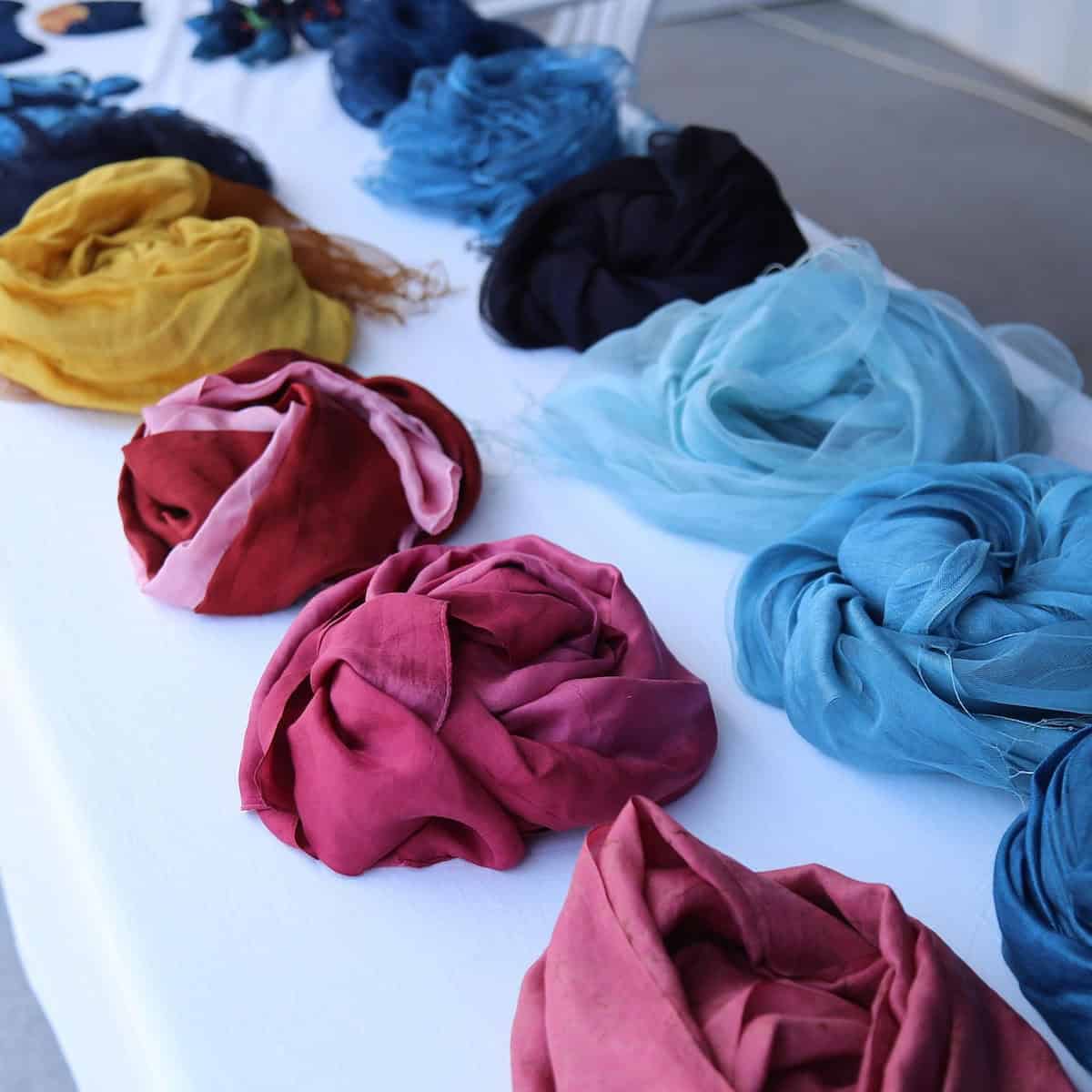
Natural dyes have been used for centuries to infuse textiles with rich colors. They’re a great way to infuse your wardrobe and art projects with nature’s beauty! With growing interest in eco-friendly options, using natural dyes is becoming increasingly popular among artisans, seasoned dyers, and even curious beginners, as it offers them a world full of colorful possibilities.
Jump to a Section
What are Natural Dyes?
These are natural colorants people use and derive from the environment, particularly plants, minerals, and even insects. The dyes originate from various sources, including leaves, fruit pits, flowers, and tree bark.
Natural dyes have been used all around the world for coloring fabrics and fibers since ancient times. Dyeing techniques have been passed down from generation to generation, with some still being used today.
It’s worth noting that, in some cultures, dyes are used not just for their natural color, but for their symbolism. In India, for example, indigo dye was used for the garments of priests and royalty. This is because they believe the color is associated with divinity, and they consider the dye source, Indigofera tinctoria, to be sacred.
However, in modern times, synthetic dyes have quickly replaced natural ones due to their affordability, versatility, and stability. The good news is that, despite their dominance, there is a growing trend of people reverting to exploring more natural options for their needs due to several concerns.
Why Choose Natural Over Synthetic Dyes?
- Eco-Friendliness - Natural dyes are biodegradable and derived from the environment, making them far less harmful to nature than their synthetic counterparts.
- Safety - Since they are made from natural extracts instead of petrochemical sources, natural dyes are generally safer for the skin, particularly for those with sensitivities or allergies.
- Cultural Value - Using natural dyes helps preserve ancient dyeing techniques, thereby sustaining both cultural heritage and local communities that still employ them.
- Unique Flair - Products made with natural dye are inherently varied and rich. No two fabrics would have the same exact shade and effects! This gives character to clothes and artworks, making them more appealing to those seeking uniqueness rather than uniformity.
- A Form of Recycling - Some sources of dyes come from agricultural or food waste. Instead of being discarded, including them in the dye process is like giving them a second life.
10 Natural Dye Sources

1. Turmeric
Turmeric is one of the best, most accessible, and vibrant natural dyes, producing a bright yellow to orange pigment. It comes from the rhizome (underground horizontal stem) of the Curcuma longa plant, which, aside from its role as a colorant, can also be used in medicine and food.
Its natural colour adheres best to protein-based natural fibers such as silk and wool. It can also be combined with various mordants to produce other colors or used with different dyes to make unique shades and patterns.
However, Turmeric is also known as a “fugitive dye,” meaning repeated washing and exposure to light make its color less vibrant over time.
2. Madder Root
Derived from the Rubia tinctorum plant, madder root is perhaps one of the oldest known natural sources of red dye. It’s used throughout the world, particularly in Europe, Asia, North Africa, and Mediterranean areas.
The root is often dried and ground into powder before being extracted in hot water to form a deep red dye bath. Combining it with mordants (such as copper, iron, or alum) and adjusting the dosage allows it to produce a wide range of colors, including orange, brown, and purple.
Turmeric is a fairly steadfast natural dye that’s ideal to use on natural fibers like silk, cotton, and wool, along with yarns and other fabrics.
3. Indigo
The most iconic of blue dyes, or true indigo, comes from the leaves of the Indigofera tinctoria. In the past, it was used to color high-quality cloth, which was then sold to very rich Europeans in the 17th to 18th centuries.
Indigo can be used to dye all natural fibers, giving them a colorfast blue shade. It binds exceptionally well with cotton and silk, even without the use of mordants. This makes it a substantive dye, meaning it doesn’t need additional chemicals when used in coloring. Fabrics dyed with indigo stand up well to sunlight and heavy washing, making it an excellent permanent natural dye.

4. Onion Skins
It might not seem like it, but the papery skins of yellow and red onions can be potent sources of natural dyes! They can produce a spectrum of warm hues from yellows and oranges to browns, which will depend on the type of onion and mordant you use.
Onion skins can be used to dye different fibers like wool, silk, and even cellulose fabrics like cotton. It’s worth noting that red onion skins may not be as colorfast as yellow ones, though using mordants will help with that.
Due to their wide availability, onion skins provide a great starting point for beginners who wish to explore dyeing fabrics at home.
5. Black Walnut
The outer hulls of the nut from the Juglans nigra or black walnut tree can be used to extract natural dyes, particularly juglone. Rich in tannin, black walnut yields rich, brown, or cream tones.
This natural colorant is suitable for use on various fabrics, particularly those made from protein or animal fibers. You can also use them on plant-based fibers, though you might need to use a mordant to help make them more colorfast.
It’s great to use when you want to achieve an antique or weathered look on your textiles. You can also combine black walnut with other dyes to shift the shade towards other tones.
6. Eucalyptus
Natural dyes can be sourced from eucalyptus trees, particularly the leaves and inner bark.
Depending on exposure to air and sunlight during the dye bath and the plant species you use, you can extract colors ranging from yellow/cream to turquoise and purple or brown. The latter colors, for example, are achievable when you use rainbow eucalyptus.
Eucalyptus is a substantive dye, so you won’t need mordants to “fix” the color, particularly on protein fibers like wool or silk. You can also use the leaves when eco printing, as eucalyptus creates beautiful, direct patterns on fabric.

7. Pomegranate
Much like black walnut hulls, pomegranate rinds contain high levels of tannin. It’s an excellent source of natural yellows, gold tones, and browns, which will depend on several factors, including the ripeness of the fruit.
They can be dried, turned into powder, and used for dyeing purposes. Alternatively, you can boil the rinds, add the mordant, and use the resulting mixture as a dye bath.
Pomegranates are plentiful to use on cotton and other plant fibers, and using mordants will help give more vibrant hues. Using iron will help provide you with greys, greens, and black shades instead of yellows. You can also combine it with other colorants, such as indigo, to achieve dark greens.
8. Cochineal
Unlike the others on our list, cochineal is derived from dried, crushed bodies of the female scale insect, Dactylopius coccus.
These insects live on cacti found in Mexico and Peru. Their bodies are processed to produce carminic acid, which then creates bright pink, red, and orange tints. Since it’s animal-based, however, it’s not a vegan-friendly dye.
Using cochineal is beneficial for protein fibers, such as silk and wool, resulting in more permanent and intense colors. You can use mordants to achieve the color you want; using alum or tanning gives you bold pinks and reds, while using iron makes it more orange or violet.
9. Sumac
Sumac trees (Rhus coriaria) are native to southern Europe and western Asia. Like pomegranate and black walnut, the leaves and bark contain high levels of tannins.
As a substantive dye, it can bind to fibers even without the use of mordants, leaving behind a variety of browns and blacks. Its use is everyday in Middle Eastern countries, such as Turkey.
This natural dye can be used in combination with other colorants. For example, you can use sumac to give the fabric a light brown hue, and then use madder root or indigo to infuse it with more colors. It’s suitable for different plant or animal fibers.
10. Malva
Delicate creams, greens, and yellows can be sourced from the flowers and seeds of the Malva sylvestris, or the common mallow. This plant is native to various areas in Europe, Southwest Asia, and North Africa.
It’s suitable for use in plant fibers such as cotton and linen. Light colors are favored for creating pastel garments, specialty textiles, and even wedding attire.

Tips and Tricks When Using Natural Dyes
Here are some tips you can use when working with natural dyes:
- Always prep your fibers properly. Thoroughly wash your fibers to remove any oil or residue that can block dye absorption.
- Use the right mordant. Alum is the go-to for brighter colors and is safe for most fabrics. However, if you want darker shades, go for copper or iron.
- Strain if needed. Some natural dyes, such as madder root and turmeric, are available in powdered forms that can be used. Be sure to strain the solution before dunking your fabric in it to avoid any blotches.
- Control the dye bath temperature. Maintain the dye bath at a consistent temperature to achieve optimal results. Depending on the fabric you use, you may need to keep the water just before boiling or a bit higher. Refer to guides for the proper temperatures to avoid uneven coloration or shrinkage.
- Don’t be afraid to experiment. Some natural dyes can be used together to create layered hues. Try layering different dye baths to shift the colors, and you’ll create something wonderful and unique in the process.


Comments
No Comments